How YouTube’s Algorithm Pushes Men and Women Into Totally Different Political Information Ecosystems
It’s long been clear that major platforms like YouTube wield significant persuasive power over their global user base. For one high-profile example, Donald Trump’s 2020 presidential campaign purchased YouTube’s top masthead ad space 20 separate times throughout the election cycle, including a bold, high-visibility ad buy on Election Day itself. But what is less widely discussed is that the platform’s core recommendation algorithm also carries major political influence, capable of shaping what information users see.
A new study hosted on Cornell University’s open-access repository arXiv finds that YouTube’s recommendation system actively routes male and female users into drastically different political information environments — even when both groups start with identical initial political interests.
To test the algorithm’s behavior, researchers built and deployed 160 automated social bots. Eighty bots were programmed to follow what the research team labeled male-coded viewing habits, prioritizing content like sports and gaming. The remaining 80 bots were coded to follow female-coded viewing habits focused on topics like style and personal vlogs. Critically, both groups of bots were given the exact same baseline level of interest in YouTube’s News & Politics content category. (The study’s authors did not respond to a request for an interview, and a key unaddressed question is how reliable it is to sort viewing habits along these gendered stereotypes.) The bots then completed 150 consecutive interaction rounds, letting researchers trace exactly what content paths the recommendation algorithm led them down.
While female-coded accounts actually encountered a higher overall volume of political content than their male-coded counterparts, the types of political issues recommended diverged sharply based on an account’s gender-coded viewing patterns. Male-coded profiles were disproportionately funneled toward a narrow set of confrontational domestic issues, including law, crime, and defense. They were also heavily pushed content tied to state power entities like U.S. Immigration and Customs Enforcement and the Department of Justice. In contrast, female-coded accounts were served a broader, more moderate mix of macroeconomic and lifestyle-related public policy topics, including international affairs, culture, and the arts. Female-coded profiles also received significantly more neutral political content, while male-coded profiles were shown far more polarizing political videos.
“YouTube is one of the most widely used platforms on the planet, yet its algorithms remain opaque and poorly understood,” says Jonathan Gray, co-director of the Center for Digital Culture at King’s College London, who reviewed the study’s findings but was not involved in the research.
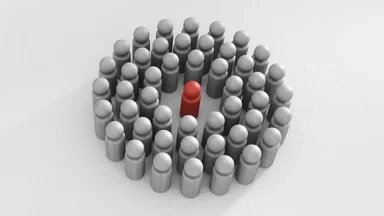
The algorithm also trapped male-coded profiles in a highly concentrated network of overlapping videos, creating a tight echo chamber where users would repeatedly encounter similar political content. Female-coded profiles, by comparison, experienced a far more diffuse and diverse information network.
“For many it is a primary source for news, advice, and guidance,” Gray says. “In a moment where platforms are promoting increasingly misogynistic and extremist content, this study contributes to a growing body of work investigating the role that their algorithms play in shaping society, culture, and politics, highlighting an urgent need for greater public scrutiny and oversight.”
Join us in New York City this September for the annual Fast Company Innovation Festival. Discounted advanced-rate tickets are available now through Sunday, July 12. Grab your festival passes today before this pricing ends.