UK Prime Minister Unveils Landmark Ban on Social Media Use for Children Under 16
UK Prime Minister Keir Starmer announced Monday a sweeping new policy that will ban all children under 16 from accessing a slate of major social media platforms — including Snapchat, TikTok, and YouTube — framed as a critical step to shield young people from harmful online content and cut back on unhealthy excessive screen time.
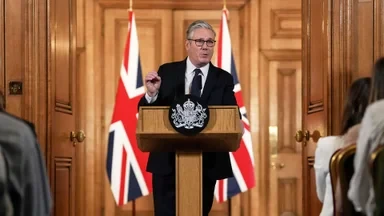
Speaking at a press conference, Starmer said he will push back forcefully against any technology companies that resist the new regulation. While he acknowledged that some teenagers will almost certainly attempt to find workarounds for the ban, he stressed he will not compromise on core protections for youth.
“I am not prepared to compromise on the safety and happiness of our children,” Starmer said. As a parent of two teenagers, he added that the negative impact of unregulated social media is obvious to caregivers across the country: “Every parent can see it with their own eyes. Social media is making children unhappy. I’ve heard first hand from families crying out for change and we will do right by them.”
Set to take effect early next year, the policy puts the UK at the center of a growing global movement to tighten online safety safeguards for minors. Australia, Canada, Brazil, and Indonesia have already passed legislation or rolled out formal age-based restrictions for children’s social media access, while France, Spain, Denmark, Thailand, and South Korea are among the nations currently researching or drafting similar regulatory frameworks.
The UK is adapting the same core model for its ban that Australia introduced last year, when Australia became the first country to bar anyone under 16 from holding personal social media accounts. Under the UK’s rules, platforms that fail to take reasonable steps to block under-16 users face heavy fines reaching millions of dollars. The ban applies to all major mainstream platforms including Snapchat, TikTok, YouTube, Instagram, Facebook, and X, but excludes child-focused offerings like YouTube Kids and private end-to-end encrypted messaging services such as WhatsApp and Signal. Starmer emphasized that all enforcement action will target tech companies, not the children who use the platforms.
The prime minister added that the UK will go further than Australia’s existing measures. The government will introduce new rules to block strangers from contacting children on gaming and livestreaming platforms, and regulators are currently reviewing additional protections including overnight access curfews and intentional breaks for automatic infinite scrolling for all users under 18. Full additional details on these extra measures are expected next month.
Starmer’s announcement has drawn mixed reactions from stakeholders across the UK and globally. The policy follows a public comment period that drew 116,000 responses from parents, tech industry groups, and children — the second-largest response to any UK government public consultation, only outpaced by the 2012 consultation on same-sex marriage. The UK government confirms more than 90% of respondents supported an under-16 social media ban.
Esther Ghey, whose 16-year-old daughter Brianna was killed in 2023 by two teenagers who had accessed harmful content online, said the ban “would potentially save so many children’s lives,” but argued it must be paired with additional supporting policy measures. Leading UK children’s charity NSPCC praised the government’s ambition, but urged regulators to require platforms to implement “robust age checks” and enforce the policy consistently.
Critics have raised a range of concerns about the new rule. Digital rights group the Open Rights Group has flagged risks around how third-party age verification companies handle and protect users’ private personal data. In a response issued Monday, a YouTube spokesperson warned that a blanket restriction “could push kids out of such curated, supervised, beneficial experiences and towards anonymous, less-safe services.”
Starmer acknowledged the practical challenges of rolling out the policy, but said success would be defined not just by full compliance, but by “a massive drop off of children on social media” and “a cultural change, a sense that actually you can grow up differently.”
The announcement comes as Starmer faces significant internal political pressure: elected prime minister less than two years ago, he is facing calls to step down from members of his own Labour Party over what they decry as poor leadership, and could face a formal leadership challenge in the coming weeks. The high-profile social media ban is widely viewed as a push by Starmer to deliver consequential policy that will form his political legacy.
The United States has publicly opposed the ban, which could further inflame tensions between the two nations. According to a statement from the U.S. Embassy in London, Washington has warned that broad social media regulations could violate free speech protections, and raised concerns that the new rules will place disproportionate burdens on American technology companies.
Starmer said he expects to discuss the policy with U.S. President Donald Trump and other world leaders at the Group of Seven summit kicking off Monday in France. “I honestly think that across world leaders, there has always been a recognition that leaders have to take steps to protect children,” he said. “I don’t think that’s controversial. There will always be arguments as to exactly what the limits of that are and what rules should be in place, but I don’t see that as a problem.”
Jon Crowcroft, a professor of communications systems at the University of Cambridge, said supporters of the ban are well-intentioned but likely misguided, arguing the restriction could block children from accessing legitimate online resources they need. “There is a real risk this will drive some users to worse sites and policing devices is close to impossible technically,” Crowcroft said. “Policing platforms is far easier, if only regulators would bother.”
Associated Press writer Jill Lawless contributed reporting to this article.